Skip to content
4.7725 Google reviews
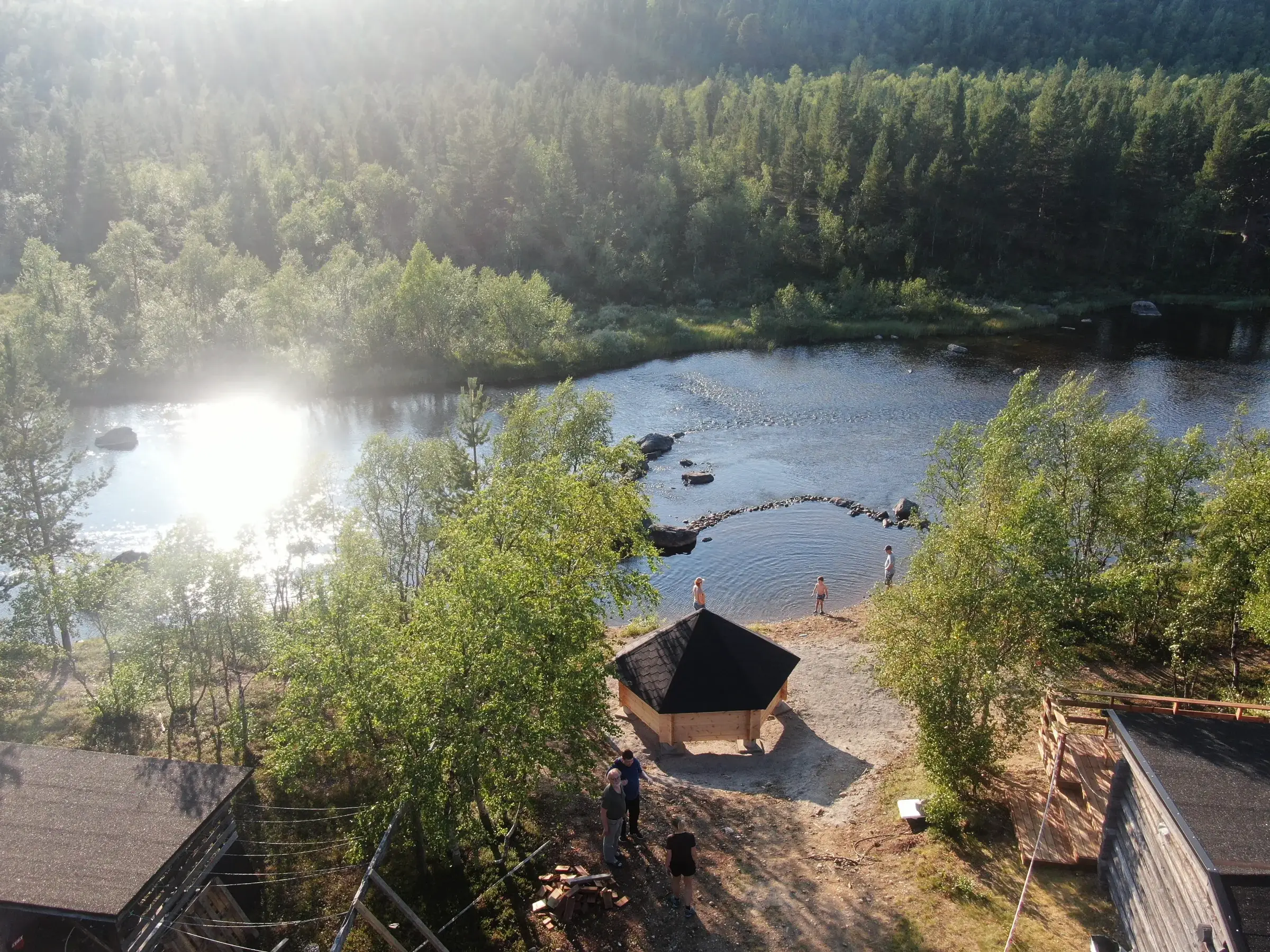
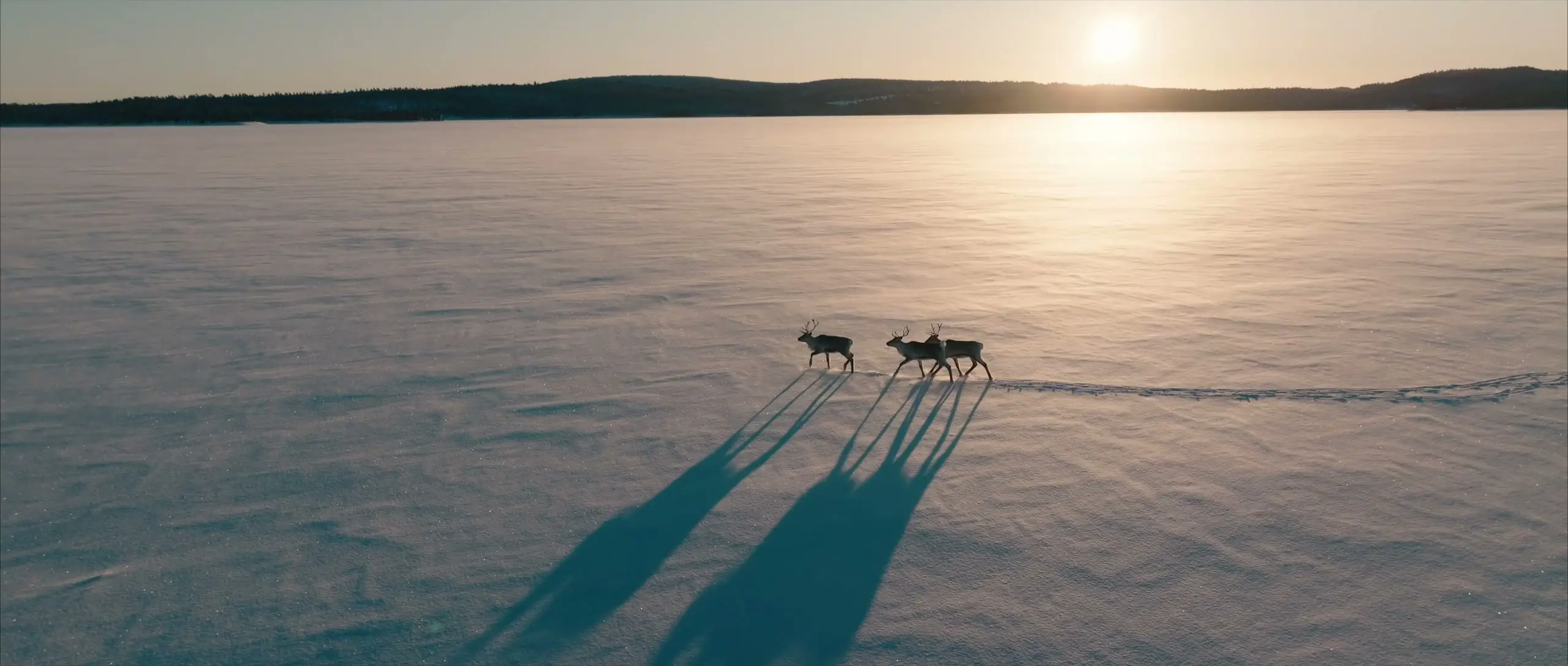
The low sun shining on the river beside the village kota on a summer nightReindeer crossing a frozen lake, with long shadows in the low sun

The Best Time to Visit Lapland, Month by Month

Month by month, what the light, the cold and the land are like in Inari, and what you can do here.

  • Northern lightsSeptember to March
  • Snow and sunFebruary and March
  • Midnight sunJune and July
  • Ruska coloursEarly September

By Kinga & Kevin, your hosts

When is the best time to visit Lapland?

December to March is the time for snow, huskies, snowmobiles and northern lights. If you want snow and daylight together, aim for mid-February to March. For the midnight sun, come in June or July. For autumn colours (ruska) and the first auroras, come in the first half of September.

There is no bad month, only different ones. Below is what each season is really like at our latitude, 69° north, so you can pick the one that suits you.

The seasons at a glance

Seasons in Inari at a glance
SeasonMonthsLightTypical temperatureBest for
Polar night and early winterLate November to mid-JanuarySun below the horizon, 3 to 5 hours of blue twilight−6 to −17 °CQuiet, cosy stays, northern lights, Christmas and New Year
Deep winterMid-January to February1 to 7 hours of daylight, growing fast−7 to −17 °C, colder snaps are commonHuskies, snowmobiles, snowshoes, ice fishing, northern lights
Spring winterMarch to April11 to 16 hours of daylight−12 to 3 °CSun and snow together, skiing, long days outside, lights in March
Midnight sun and summerLate May to AugustUp to 24 hours of daylight1 to 19 °CHiking, packrafting, fishing, paddling, long calm evenings
Ruska and autumnSeptember to October13 hours falling to 9, with real nights again−2 to 11 °CAutumn colours, berries, mushrooms, first auroras

Temperatures are the average daily highs and lows at Ivalo airport, 1991–2020, from the Finnish Meteorological Institute. A single day can be far colder or milder.

Polar night, midnight sun and ruska

Three moments that only the far north has, with their dates at our latitude.

  • Polar night, or kaamos

    About 28 November to 13 January

    The sun stays below the horizon, but it is not dark all day. For 3 to 5 hours around noon the land turns a deep, soft blue. A calm, inward time, with candlelit evenings, the sauna and a good chance of northern lights on clear nights. If you need sunshine, choose February or March instead.

  • Midnight sun

    About 20 May to 23 July

    The sun does not set. You can hike, fish or paddle at midnight in warm golden light, and the nights never turn dark. Bring an eye mask. There are no auroras in these months, and mosquitoes are part of the bargain in late June and July.

  • Ruska, the autumn colours

    The first half of September

    A burst of red, orange and gold on the fells and birches, a little earlier up here than farther south. It is a short window and nature sets the date, not us. September also brings the first dark skies and the first auroras, with fewer visitors and no need for snow gear.

What each month is like

Pick a month for its light, its weather and what you can do with us then. The adventures and holidays follow our booking pages, so the list is always up to date.

May

The thaw. Rivers open, paths can be muddy and some trails are not yet usable. A shoulder month.

Daylight
21.5 h
Midnight sun from 20 May
Typical high / low
9° / 1°
Average 5°
Snow
Melting away
Northern lights
None, the nights are bright

June

The sun never sets and the nights are mild enough to stay outside. Pack a head net.

Daylight
24 h
Midnight sun all month
Typical high / low
15° / 6°
Average 11°
Snow
None
Northern lights
None in the midnight sun

July

Our warmest month and the longest days, made for hiking, fishing and the water. Mosquitoes are at their peak.

Daylight
24 h
Midnight sun until 23 July
Typical high / low
19° / 10°
Average 15°
Snow
None
Northern lights
None in the midnight sun

August

Warm days, fewer bugs and the first dark skies, and often quieter than July.

Daylight
18 h
Sunrise 04:19Sunset 22:13Nights get dark again
Typical high / low
16° / 8°
Average 12°
Snow
None
Northern lights
Back late in the month

September

Ruska colours the fells in the first half of the month, and the first auroras appear. Our quiet favourite.

Daylight
13.5 h
Sunrise 06:27Sunset 19:48
Typical high / low
11° / 4°
Average 8°
Snow
None
Northern lights
Good, the first dark nights

October

Bare trees, first snow, not yet winter. Quiet and moody: the last hikes, fire evenings by the kota and the first dark skies.

Daylight
9 h
Sunrise 08:22Sunset 17:34
Typical high / low
3° / −2°
Average 1°
Snow
First snow, a few cm
Northern lights
Good when the sky clears

November

The in-between month. Snow arrives but the days are short, and most visitors prefer to wait for December.

Daylight
4.5 h
Sunrise 09:46Sunset 14:08Polar night from 28 November
Typical high / low
−3° / −9°
Average −6°
Snow
About 15 cm
Northern lights
Good, but often cloudy

Climate normals, not a forecast. Highs and lows: Ivalo airport, 1991–2020, Finnish Meteorological Institute. Snow: average depth at FMI's Kaamanen station, the nearest to the village, 2009–2025. Sunrise and sunset on the 15th, at the village, in Finnish time.

The lights come on their own time. Our job is to put you under a dark sky at the right moment.

Northern lights are not a show with a timetable. We never promise them, and we say so before you book.

When to see the northern lights

The sky here is dark enough for auroras from late August to early April, and the best odds are from September to March on clear nights. They need three things at once. It must be dark, the sky must be clear, and the sun must be active enough to send charged particles our way.

We cannot control any of them, which is why we suggest at least three nights. Over three nights most guests see them at least once, but December and January are cloudier, so the clear nights are fewer. In the midnight-sun months, from late May to late July, you will not see auroras at all.

Our village sits away from town lights, so it is a good place to wait, and if the sky opens we let you know. From September to March you can also wait for the lights by the fire, with smoked salmon on the embers.


Northern Lights by wooden sledge 2 hours

Experience the Aurora on a cosy wooden sledge safari in Lapland, far from light pollution, in a peaceful, intimate small group in one of the best spots to chase them, Muotkantunturi Wilderness.

  • 2 hours
  • Easy, for everyone
From €160 / person

Northern lights over the village

1 / 6

  • A green aurora sweeping over a snowy kota and frosted birches
    A green aurora sweeping over a snowy kota and frosted birches
  • A bright green aurora reflected in the dark river by the village
    A bright green aurora reflected in the dark river by the village
  • A guest on the lit terrace looking up at the northern lights between pink-lit birches
    A guest on the lit terrace looking up at the northern lights between pink-lit birches
  • Green and violet curtains of light over snowy trees
    Green and violet curtains of light over snowy trees
  • The northern lights over a wooden building strung with warm lights
    The northern lights over a wooden building strung with warm lights
  • Green northern lights above a log cottage with lit windows
    Green northern lights above a log cottage with lit windows

What to wear by season

Dress in layers, whatever the month. For our activities we lend you warm overalls, so you do not need to buy anything for the trip.

Winter

Start with a wool or merino base layer, a warm middle layer and windproof outer clothes. Add warm boots, a hat, and mittens rather than gloves.

Spring and autumn

Bring a waterproof jacket and a fleece or light down layer, and shoes that can take mud and wet snow.

Summer

Light trousers, a hat, sunglasses, sturdy shoes and insect repellent. A head net is cheap and helps a lot in July.

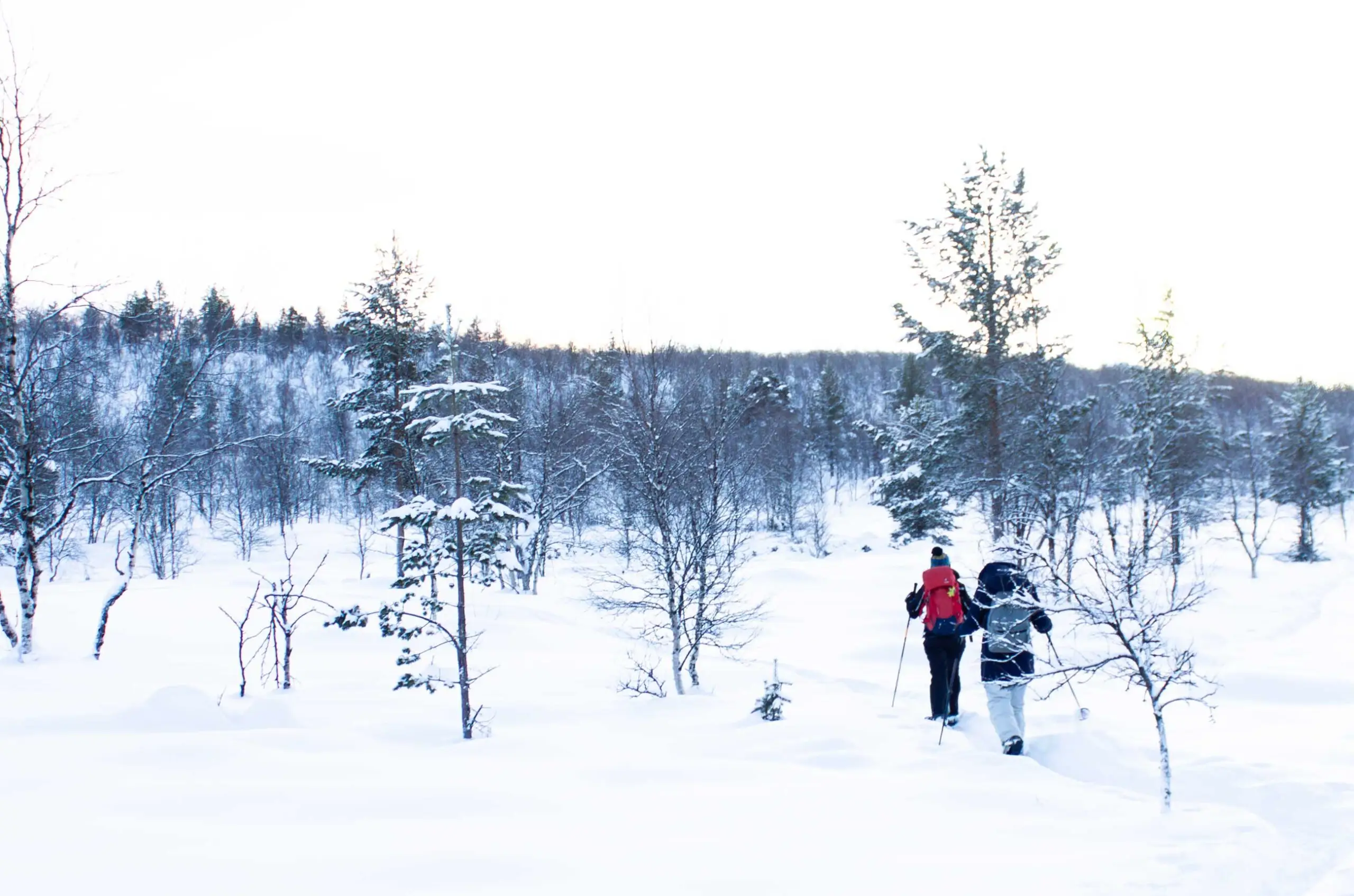
Two skiers crossing a snowy birch forest

Rent your gear in the village

  • Winter overalls
  • Winter boots
  • Extreme cold gloves
  • Snowshoes
  • Mosquito head net

See all gear to rent

A skier in goggles resting on his poles on a snowy fell, the low winter sun on the horizon

Questions ? Your Little Guide to Lapland

Free, with local tips from those who call Lapland home.

When to visit Finnish Lapland, what to wear, how to get here and what is myth or reality: the questions we hear most, answered from our own local experience to help you prepare, travel better and enjoy the real Lapland.

We send the guide by e-mail. Unsubscribe any time. Privacy policy

Questions about the seasons

What is the best month to see the northern lights?

September to March on clear nights. For the best mix of dark skies and decent weather we like September and late February to March. Plan at least three nights, because the lights cannot be promised.

How cold does it really get?

A normal winter day is between −15 and −25 °C, and cold snaps of −30 °C happen most winters. Inari is very dry, which makes the cold feel milder than it sounds. The average January high is −8 °C and the low −17 °C.


Is the polar night dark all day?

No. From about 28 November to 13 January the sun stays under the horizon, but you get 3 to 5 hours of soft blue twilight around noon, and the snow reflects it.

When is ruska in Inari?

Usually the first half of September. It varies each year with the weather, so we cannot give an exact week.

Can I see the northern lights in summer?

No. In the midnight-sun months, from late May to late July, the sky is never dark enough. Auroras return in late August.

Which month is the best value?

Early December and April are usually the quietest and the most affordable. Christmas, New Year and February are the busiest, so book early for those.

Is it too cold for children or dogs?

Not if they are dressed for it. We lend warm overalls for activities, and dogs are welcome at the village. On the coldest days very small children and some dogs may be happier indoors, and we will tell you.

Is summer worth the trip?

Yes, if you like hiking, fishing and long evenings. June and July have the midnight sun and August is quieter and warm, but bring repellent for the mosquitoes.

News from the fell

A short letter when there is something worth telling, never more than once a month.

We send you a short e-mail to confirm. Unsubscribe any time. Privacy policy

Responsible travel

Small groups, local guides and respect for the wilderness and Sami culture, recognised by three sustainability labels.

How we protect the place

How to get here

Muotkan Ruoktu is located in the beautiful Muotkatunturi wilderness of Finnish Lapland, along the Kaamanen–Karigasniemi road, on the way to the North Cape (Nordkapp), north of Inari.

Directions on Google Maps

Talk to us

We answer 9:00–22:00 (Finnish time)

Write to us

Tell us a little about your plans and we will reply by e-mail, with ideas and prices.

With the country code, if you would like a call.
Dates, who is travelling, what you would like to do. Anything helps.

We use your details only to answer you. Privacy policy

Dogs welcome

We love animals: your dog is welcome to travel with you, as long as it respects the place.

See all questions

A small favour from a family village

We're a small family-run village, not a hotel chain. With your OK we can see which pages help you plan and which of our few ads work, so we spend less on ads and more on the village. Google Maps and our guest reviews load too. Nothing optional loads until you say yes. Cookie policy